Tuesday, February 12, 2019

Are All Fighting Systems 'Martial Arts'?


When I was a kid, the term martial arts meant fighting forms designed for self-defense that had distinct Far Eastern roots. We all came to know that judo, karate and kung fu were martial arts. In time, non-Eastern forms would be included, such as Krav Maga, Sambo, and Capoeira. Recently, a thread on reddit asks if Mike Tyson was one of the top martial artists of the last century. It really begs the question: Is boxing a martial art? For some, this broadens the definition of martial arts too much.

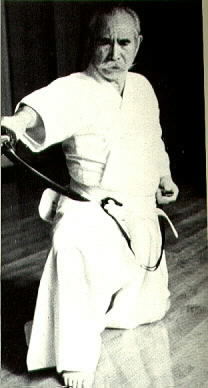
Of course, some martial-art styles don't engage in contests. Iaido, a Japanese sword-drawing art that utilizes pre-arranged solo forms, is one. Others such as Aikido is strictly defensive in nature. Traditional Aikidoka do not engage in contests like in sport Jiu-jitsu or Judo. In Karate, point-style matches are scored where strikes — particularly punches and kicks to the head — do not make full contact. Adherents would be foolish to think that training exclusively this way would prepare you for the real thing. It would be like thinking that playing flag football could get you ready for the NFL.

Bruce Lee, Miyamoto Musashi, et al., have said that in the martial arts the way you train is how it happens in real life. Musashi was a 17th century duelist who faced over sixty men in his life. Lee, who died in 1973, had a combat resume that's a bit sketchy. Joe Lewis, one of the great full-contact fighters who briefly studied with Lee, said in an interview that while Lee was a great teacher with a wealth of knowledge, he was not a fighter. Lewis is using the term fighter in the same way you would call a boxer a fighter. Lewis himself was a fighter of course, as was Bill "Superfoot" Wallace and Benny Urquidez, other karatemen who later became full-contact kickboxers.

So should all fighting systems be regarded as "martial arts"? Martial arts have roots in militarism. Are members of US Navy SEALs and Special Forces martial artists? Indeed, the Marine Corps has created a martial arts program dubbed the Ethical Marine Warrior, which has a philosophical core of honor, courage, and respect. Certainly, these are virtues that are consistent in the Japanese budo, the traditional martial arts and ways.


Labels: , , , , , , ,

Saturday, May 19, 2018

Strike First!


The title of this post comes from part of the motto of the Cobra Kai school from The Karate Kid movie. Cobra Kai is now a series on YouTube.* Yes, after 34 years, Daniel-san and bad guy Johnny ("Sweep The Leg") are back! These guys are in their fifties now, and they're still at it. Fifty is the new thirty-five. I'm pretty sure Johnny is still hawking "Strike First, Strike Hard, No Mercy" at his new Cobra Kai school. This idea is diametrically opposed, deliberately I assume, to one of the most fundamental tenets found in karate, among other styles. But the Cobra Kai "Strike First" stance takes no prisoners. "Strike Hard" is a no-brainer, I suppose. "Mercy is for the weak" is dysfunctional; roles can be reversed. What goes around, comes around.

In 1938, Gichin Funakoshi put forth 20 precepts for karate students to train and live by. His Twenty Guiding Principles of Karate contains the famous excerpt karate ni sente nashi, or "There is no first strike in karate." This basically implies that you don't provoke a fight; it does not mean that in the midst of what looks like a potential altercation — after all other options have failed — you wait to get laid out on the sidewalk. Deescalation isn't always available. Unprovoked attacks and sucker punches happen. If you're lucky enough to factor in time and distance, then reading intent or energy (shin or ki) is possible.

In traditional karate, there are two basic strategies in dealing with an aggressor:

  • Go no sen. This means "after the attack." A basic example would be an aggressor steps in with a punch, you block and counter with a strike.
  • Sen no sen. This is "before the attack." An aggressor announces he wants to kill you, and without hesitation you strike. This is like the old military aphorism "The best defense is a good offense."

It's easy to see how both of these concepts can be misconstrued. Waiting for an attack with the sole purpose for a counter and strike is a recipe for disaster. And the legal ramifications of kicking someone in the head because he flips you off should be obvious.

These concepts are not exclusive to karate, and there are more no sen principles in other arts, such as Kendo and Aikido. These strategies go into much greater depth than I describe. For a deeper study into these principles dealing with situational assessment in actual combat, check out The Book of Five Rings by the Japanese swordsman Miyamoto Musashi (c. 1645).


* This is only on YouTube's new "premium" channel. So yes, that means it ain't free. It's either a monthly rate, or pay-per-view.

Labels: , , , , , , , , , ,

Thursday, December 31, 2015

What Would You Do?

Into a soul absolutely free

From thoughts and emotion,

Even the tiger finds no room

To insert its fierce claws

— A Taoist Priest, from the opening pages of Tao of Jeet Kune Do, by Bruce Lee.


While doing research for an article it happened that I got sidetracked by another blogger's post, in addition to an unrelated but relevant news report. So for now, I feel compelled to bring you a lesson in dojo etiquette and managing one's impulses out into the real world. A Karate Man Would Not is the fictional tale about a young trainee who is exhorted by his master to temper his relationships with others outside of the training hall. The master, in typical fashion, is not very direct about how one should exactly approach this, hoping that the student will get it on his own with minimal prodding. Without giving too much away, the story focuses on how to remain cool when challenged in a non-physical way. Easy in theory. Not so easy when it really goes down.

Case in point: A man confronts a group of people protesting a fracking project taking place near public schools in Mars, Pennsylvania. Clearly spoiling for a fight, the antagonist lets loose with a barrage of insults and insinuates that the camera man is somehow responsible for "milking my tax dollars" (to say nothing of the fact that oil companies are entitled to billions of dollars in taxpayer subsidies, but I digress) because citizens have apparently little better things to do than to worry about natural gas drilling where they live.

Please watch this to the end. Examine your inner state as you view this.

DISCLAIMER: Profane and racist language


I don't know about you, but my initial viewing of this left me feeling like I wanted to put my foot through a wall. The fact that this is an environmental issue, or about free speech, or that this idiot ended up getting fired from his job because his boss saw this now-viral clip on YouTube is besides the point. The peaceful group were for the most part unfazed by this verbal attack. There's no doubt they harbored some fear, and for good reason. Realize that this guy felt that he held the moral high ground with this tirade.

Who among us could remain poised in the face of such a vicious verbal barrage? In the past I've written about honor and a real life tale of what happens when self-restraint fails. Whether your reaction is one of fear or that of anger, it should not dictate how you respond. As Musashi said, "In fighting and in everyday life you should be determined through calm. Meet the situation without tenseness yet not recklessly, your spirit settled yet unbiased. An elevated spirit is weak and a low spirit is weak. Do not let the enemy see your spirit."

Labels: , , , , , , , , ,

Friday, January 02, 2015

The Reluctant Point-Fighter

The attitude of destroying the enemy with one cut is based on the attitude of "going in" to the attack. If not, your spirit is lacking and your resolve is less than complete. You must always close in on the enemy regardless of the indications of the enemy's strength.

— Miyamoto Musashi


In karate and tae kwon do sparring, scoring is kept by counting hand and foot strikes that make contact as points. The point system came about from the idea that atemi (vital strikes) are indeed lethal. Obviously real atemi are prohibited in sportive matches, and as such point-matches morph into a game of glorified tag. What happens is that players tend to fight from exaggerated fighting ranges (ma-ai) with hands held low (especially in TKD), and at times not fully committing to techniques, especially kicks. Combatants are trying to score, but are especially leery of getting countered or "tagged." For these reasons, a point-match is nothing like a realistic fight.


This is clearly a problem if you fancy your art as a viable means of self-defense. In sportive arts like boxing, wrestling and judo, players are fully committed to hitting, getting hit, throwing and getting taken down, even in practice drills. Realize that how you train on the mat is how it happens in real life.

Somebody once told me that the difference between black belts and those at the lower echelon was really a degree of self-interest. "Black belts don't care," he said. What he meant was the BBs aren't concerned with the outcome of committing to a combination of techniques against the opponent. They're more centered in the here-and-now. That means visualizing the attack and following through without being hindered with the mental baggage of a counter. Still, judges don't want to see matches that look like a train wreck or game of chicken.

The bane of the point-match isn't whether or not a technique is so devastating that it can maim or kill, but the aversion to being hit in return. That doesn't mean to disregard defensive techniques completely during a match. Just don't be so mindful of your opponent's strategy that it impinges your game plan. The Japanese concept of kobo-ichi is just another way of saying the old adage "the best defense is a good offense."

Labels: , , , , ,

Saturday, January 26, 2013

The Way of Walking Alone

Miyamoto Musashi (1584-1645), the infamous ronin who bested sixty men in duels during Japan's Edo period also had a soft side as he created works of ink paintings, calligraphy and poetry. In his prime Musashi was a living terror, but in his later years became more introspective and philosophical. In what was probably his swan song he composed his Dokkodo - The Way of Walking Alone.


  1. Accept everything just the way it is.
  2. Do not seek pleasure for its own sake.
  3. Do not, under any circumstances, depend on a partial feeling.
  4. Think lightly of yourself and deeply of the world.
  5. Be detached from desire your whole life long.
  6. Do not regret what you have done.
  7. Never be jealous.
  8. Never let yourself be saddened by a separation.
  9. Resentment and complaint are appropriate neither for oneself nor others.
  10. Do not let yourself be guided by the feeling of lust or love.
  11. In all things have no preferences.
  12. Be indifferent to where you live.
  13. Do not pursue the taste of good food.
  14. Do not hold on to possessions you no longer need.
  15. Do not act following customary beliefs.
  16. Do not collect weapons or practice with weapons beyond what is useful.
  17. Do not fear death.
  18. Do not seek to possess either goods or fiefs for your old age.
  19. Respect Buddha and the gods without counting on their help.
  20. You may abandon your own body but you must preserve your honour.
  21. Never stray from the way.


Labels: ,

Sunday, December 30, 2012

Never Bring A Gun To A Swordfight

Patterson's post on gun violence includes an image of a street sign proclaiming that "Real Men Use Fists" with a slash through a revolver that made me think of firearm use by samurai during feudal Japan. When relative peace finally emerged during the Tokugawa period (1603 - 1868) firearm use had come to be seen as ignoble. Maybe "real men" of this time didn't like to use guns, but the Way of The Sword was held in high regard. Budo culture now took root and swordfighting schools flourished. Kenjutsu skills were honed not primarily for combat, but as a means to develop character and inner self-control. Two major treatises were written during this period: The Book of Five Rings by Miyamoto Musashi, and The Life-Giving Sword by Yagyu Munenori, both of which delve into philosophy, psychology, and combat strategy (heiho) while giving little regard to any technical explanations.

Swords presumably cannot inflict the mass harm that a sidearm can, let alone an assault rifle. This didn't stop Sokaku Takeda from downing a group of Japanese laborers with his sword following a verbal altercation in the late nineteenth century. After he was acquitted, Takeda wised up and focused his efforts on the weaponless art of aikijujutsu.

In Western lore, the sword was the weapon of choice for the duel before pistols became fashionable. A pre-presidential Abraham Lincoln was challenged to a saber fight that he deftly wiggled out of*. A younger Lincoln, however, did manage to compete in a number of no-holds barred grappling matches†, none of which ever resulted in a falality.

A while back I saw a review on a book describing actual swordfighting techniques called Street Sword: Practical Use of the Long Blade for Self-Defense. I haven't read it, nor do I plan to. For now, I'll just stick to hand-to-hand combat. Somehow I feel safer that way.


* Steven Pinker 2011. The Better Angels Of Our Nature: Why Violence has Declined. The Penguin Group.
† Glenn J. Morris, Ph.D. 1998. Martial Arts Madness. North Atlantic Books.

Labels: , , , , , ,

Sunday, June 12, 2011

Dealing With Multiple Attackers


I visited a dojo recently that touts itself as traditional. Karate schools seem to do that more and more now with the influx of new styles, MMA and "reality" combat. After a few rounds of kata were performed the instructor had us sit down and asked everyone for their personal take on the ancient forms. One student opined that without kata, karate would just be a form of kickboxing. Another said that kata was a type of meditation.

I suggested that kata represents fighting more than one opponent.

Does anyone train how to defeat multiple assailants in a freestyle manner? Have you ever had to fight off more than one attacker? Realistically you can only deal with one adversary at a time, even if there are cohorts present to ensure a certain victory. Realize that bullies and jerks tend to travel in packs.

According to internal arts expert Bruce Frantzis, there is an upper limit to the number of attackers in a given assault.


Now many of you here probably never had to fight seven or eight or ten or fifteen people at once. So I'll speak personally on having done that on more than one occasion. Here's a simple fact: No more than eight people can come at you at once without them basically getting in each other's way. The only way they can do that is if they have long weapons (such as) spears.


With the increasing presence of gang violence, multiple gang member attacks on solitary non-gang affiliated victims is on the rise, even in suburbia. Many citizens have responded to this by claiming their right to bear arms, but naturally the bad guys are packing heat as well. Needless to say that being confronted by more than one attacker is a worst case scenario, even for a skilled fighter, no matter how well seasoned.

But what to do if this happens? One of Musashi's basic rules of strategy was to establish an escape route, even if facing but a single foe. So my advice for prevailing against a band of thugs? Forget kata, psychology or conflict resolution. Run like hell.

Labels: , , , , , , , ,

Monday, September 20, 2010

My Top Ten Reading List

Reading is fundamental. I like the web, I'm a bit of an internet junkie, but when push comes to shove, I really prefer books as my main reading source for my martial arts material. Here's a list of what I consider essential information for the serious martial arts practitioner. I'm sure most of you will at least recognize some of these titles. I've arranged them in no particular order.


Book Of Five Rings — by Miyamoto Musashi

Many, many versions of this classic book are available. Some say translating it from the original Japanese leaves something to be desired. The copy I have was translated/interpreted by Steve Kaufman, a longtime instructor from New York. Musashi was a ronin (masterless samurai) that lived during Japan's feudal period. He was regarded as the kenshi (sword saint) of Japan, but by today's standards would be considered a sociopath. He killed his first man at age thirteen, was not above murdering children, despised bathing, supposedly had some wretched skin disease (probably from lack of bathing)... well, you get the idea. Five Rings is the martial arts classic treatise on strategy and psychological warfare.


The Way of Kata — by Lawrence A. Kane and Kris Wilder

I actually chanced upon this gem at a used book store. Although written from a Goju-ryu karate perspective, this is a useful primer for those interested in what I consider the real nuts and bolts of karate: kata (forms) and its applications. Includes guidelines for deciphering martial applications and gives some background on kata's history, strategy and tactics.


Zen In The Martial Arts — by Joe Hyams

Hyams was a celebrity Hollywood columnist from the fifties and sixties who was also a bit of a martial arts journeyman, training with the likes of Chuck Norris, Ed Parker and Bong Soo Han (who coached actor Tom Laughlin for his role in Billy Jack). Some interesting anecdotes to be found here, using Zen as a central theme. Overcoming everyday obstacles, difficulties in training and even how to deescalate a potentially violent altercation round out this reading.


My Journey With The Grandmaster — by Major Bill Hayes USMC (Ret.)

I've previously reviewed this work. Kyoshi Bill Hayes recounts his time spent on Okinawa during his hitch in The Corps training in the old-school way of traditional Shorin-ryu karate-do. Highly recommended. Copies of this future classic can be obtained directly from the author at oldstudent1@cox.net.


Martial Arts Madness — by Glenn Morris

Another previously reviewed selection. Cited as "field notes of an American ninja", Morris trained in a number of styles including Isshinryu karate with the late Sherman Harrill. If chi, psi abilities and psychic powers float your boat, this book is for you. A weird, fun read.


Classical Budo — by Donn Draeger

Budo - martial arts as a way of life - is Draeger's prescription for self-perfection and right living. The -do in Japanese budo can be equated with the Chinese Dao, or "path." Draeger starts with budo's historical settings in Japan, followed by its concept, rationale, and method. Many examples of the teacher-student relationship are exquisitely detailed.


Tales of Okinawa's Great Masters — by Shoshin Nagamine (translated by Patrick McCarthy)

Nagamine Sensei (1907 - 1997) was one of the most prolific authors on traditional karate and its history, in addition to being the founder of his Matsubayashi-ryu karate. Stories of character and courage are told concerning the lives of some of Okinawa's most famous karate men. Includes a section on tegumi, Okinawan wrestling.


On The Warrior's Path — by Daniele Bolelli

Bolelli, a Kung Fu San Soo practitioner, does a fine job describing warrior archetypes, Chinese tradition, and bridging martial arts philosophy with the advent of MMA. In particular the section on Internal Martial Arts — its history and certain misunderstandings which are clarified, make this a worthy read.


Living The Martial Way — by Forrest E. Morgan, Maj USAF

A must read for anyone thinking about embarking on the martial path. The author - relying on extensive experience both in the martial arts and military service - outlines the mindset and spirit necessary for the aspiring martial artist. Written with frankness and wisdom, Morgan maintains that training in the martial way is not for the hobbyist or those looking to rack up awards or titles. Sections include "The Secret of Personal Power" and "The Great Sham of Modern Martial Arts." Highly recommended.


Okinawan Karate: Teachers, styles and secret techniques — by Mark Bishop

Karateka and researcher Mark Bishop sheds light on all of the major Okinawan karate styles via interviews with select Okinawan masters. Historical tables, and a list of every Okinawan karate kata (and what styles they are affiliated with) can be found in the back of the book.

I was a bit disheartened to see the section on Isshinryu karate lacking in depth, unfortunately due to a rather terse exchange between the author and Kichiro Shimabuku, 10th dan (the founder's son).

...but as he [Shimabuku] was a 'very busy man' he could spare me only a little of his 'precious time'; consequently my notes on Isshinryu may seem to be lacking. Kichiro Shimabuku, being short, plump and bald with an effeminate squeaky voice, is not what most people imagine a karate teacher to be like.


Ouch. I guess it's true: the pen is mightier than the sword.

— — — — —

If anyone has a good title to add to this list, do share.

Labels: ,

Friday, February 06, 2009

Scare Tactics


Joe Lewis, sport karate's first badass from the 60s, is said to have had the ability to detect kyo (weakness) in his opponents. Whether in mind, body or spirit, Lewis would own you. Likewise, heavyweight boxing champ Sonny Liston had developed a habit of scaring his opponents half to death before the fight even happened. He perfected a glowering presence when entering the ring, and would go so far as to stuff towels under his robe to enhance his already massive frame. Both Lewis and Liston always gave the impression that the match was personal and that they wanted to kill you.

In the animal kingdom, defense mechanisms rooted in illusion bear a similarity to the psych-out fight strategies found in athletes. For example, the common house cat (a natural predator) will arch its back and raise its hair to give the physical appearance of being far more formidable than it actually is. When Miyamoto Musashi advises to "make yourself larger than your opponent" this is not strictly a metaphor.

It's interesting that in Musashi's tome, The Book of Five Rings, very little is discussed in terms of actual technique. His forte was cunning and effective cheating or whatever else would get the job done. Musashi's real weapons were psychology, intimidation, and especially, intent, which could only be forged through severe training. By his estimation, of the sixty or so men he defeated in duels, many had superior technical skill, strength, or the advantage of youth, but lacked the moxie to gain the upper hand. Overcoming fear is an obstacle that any warrior must face sooner or later, but using your adversary's own fear can prove to be a viable way to level the playing field.

Labels: , ,

Friday, January 18, 2008

Finding Balance


There was a movie a while back called Gung Ho that comically depicts the high standards of the Japanese workforce. In reality, this intense work ethos may be what's responsible for the high suicide rate in Japan. A recent US survey reveals that the life expectancy for the average CEO after retirement is about thirty months. So even if your job doesn't kill you, not showing up for work doesn't fare so well either. Finding oneself without purpose after a lifetime of work and achievement must be akin to having the rug pulled out from under you.

I used to train with a woman with four young kids. Even after she earned her black belt she continued to train five times a week, teach on the same days and hold down another part time job. It was a bit much and her hectic lifestyle was palpable. Commitment is essential in the martial arts, but not when it morphs into fanaticism.

Do you consider yourself a devotee of the martial arts? What do you enjoy doing when you're not in the dojo? Do you have any hobbies besides your training? (My apologies to the devout budoka who may be offended by the notion that the martial arts are a "hobby".) When the medieval kenshi Miyamoto Musashi said "learn the ways of other men" he wasn't referring to different styles of combat. Judo founder Jigoro Kano and karate's Gichin Funakoshi were skilled in the art of calligraphy and poetry. Musashi made beautiful paintings, wood sculptures and hand guards for swords. These men set aside time for creative outlets as a way to counterbalance their considerable efforts invested in the martial arts. Training to the exclusion of all else leads to stagnation and craziness (kichigai). "All work and no play makes Jack a dull boy" said Jack Nicholson's character in The Shining. And we all know how Jack ends up.

Labels: , , ,

Monday, June 25, 2007

Preventive Measures


You can spend a lifetime studying the martial arts. And yet your sensei preaches that you should only use your skills as a last resort. Violence always begets violence, we're told. Carl Jung wrote, "Every victory contains the germ of future defeat", meaning that there is always someone who can take you on, no matter how much success you've had in your ability to handle yourself in the past.

Regardless of how many years you've spent in the dojo, the possibility always exists that you'll encounter something you've never seen before in your training. So how do you avoid this ugly scene before it happens? Believe it or not, this starts by how you present yourself to the world. If you appear arrogant and look for trouble, there's no doubt you'll find it. However, if you perceive yourself as a victim or a loser, you'll end up for sure as someone's target practice. The key is to combine equal amounts of humility and confidence that you have developed from your training into your daily life. Humility and confidence are the yin and yang of the martial artist's persona. The great swordsman/strategist Miyamoto Musashi once said, "The warrior must make his warrior's walk his everyday walk". This is a quality of living that can't be faked, and its essence can be felt even by strangers. I've read accounts of how martial artists should carry themselves in public; exuding grace, good posture and so on, but I believe that there's an ineffability to the martial artist that goes beyond the physical.

The main difference between the martial arts and competitive martial sport is one of focus. A muay thai kickboxer has an innate sense of what it is to be a fighter; fighting comes naturally to this individual. In my experience, the majority of people who gravitate towards traditional martial arts do so out of a desire to simply protect themselves, not necessarily to engage in contests. The martial arts adept has hard earned fighting skills and can fight, but would rather live to see another day if at all possible. If it's true that fighting is really the final refuge for the martial artist, then measures should be considered to offset this possibility ahead of time.

Awareness is imperative in the martial arts. The eyes must see all ways, the ears must listen in all directions are Okinawan karate precepts, but we have more at our disposal than ordinary sensory perception. The human nervous system is hardwired to detect danger, even if there is no apparent threat. Having a "gut feeling" is not really a metaphor, but the response of neurons in the abdominal region that interprets something as wrong. Intuition (kan) is real and operates best when we're in a state of bare-minded attention. Simply put, be aware of your surroundings.

If you do find yourself in a pre-violent altercation, try to remain calm. Convey the idea that while your intentions are peaceful you're still able to hold your ground. Do not assume any kind of a fighting posture or brandish your fists as this will signal the prelude to a full blown assault.

As much as ethics and philosophy are a part of the martial ways (budo), at its core they are first and foremost concerned with actual combat (bujutsu). We train for the worst case scenario, but always hope for the best.

Labels: , , ,

Tuesday, October 10, 2006

Know Your Environment


The dojo - the training hall - is an austere, plain structure: unadorned walls, smooth floor, matted and well lit. For these reasons, the traditional dojo doesn't accurately represent a realistic setting for a confrontation. Maybe some schools should include bar stools and pool tables as part of their training equipment. If "combat effectiveness" is what you're looking for in your art, then concepts besides developing techniques that only work in a pristine, flawless martial arts school need to be considered.

Have you ever trained outdoors or in an unfamiliar environment? Obstacles can and do get in the way, such as an alley wall or a depression in the ground. Having to defend yourself on the side of a hill or during inclement weather is not only challenging, but could get downright ugly. Attacks can happen in the most unlikely surroundings. Most robberies and confrontations take place at night. During Okinawan karate's formitive years, secretive training took place after sundown. As such, fighting techniques were developed with only the aid of moonlight. These same practitioners trained on the beach with eku (boat oars), and used their makeshift weapons to flick sand into the eyes of their adversaries. The master duelist Miyamoto Musashi would make it a point to keep the sun to his back during his bouts of mortal combat. If fighting indoors, he would plan the possibility of escape if necessary, previewing the area for doors, windows, or other avenues of exit. Musashi felt that escaping from overwhelming circumstances was compatible with warriorship, and was simply a part of effective strategy (heiho) . Live to fight another day.

Use everything to your advantage at all times.

Examine your environment...

Labels: , , , ,

Thursday, May 11, 2006

Solitude


What would you do if the school you train at either closed or moved out of the area? Would you continue to practice your art on your own? Without the guidance of an instructor, the social interaction of other students, or the obvious incentives of attending a public martial arts school, what would it take to motivate you to continue training? In his book, Living The Martial Way, Forrest Morgan writes, "...undergoing shugyo (austere training) alone, with no one else to motivate you... can temper your spirit like nothing else can. And there's no warrior ritual more traditional than solitary shugyo." Many of us unconciously appraise ourselves and our abilities based upon how others perceive us, including and especially authority figures, such as a teacher. Without a perspective that comes from without, we must rely on self-referral. This is a potent and meaningful way to live.

Miyamoto Musashi had no master, and for the most part lived a solitary existence; he was a ronin. In the twilight of his life, Musashi retired to a cave to reflect upon his way -- his insights into the ultimate meaning of the martial arts. In the end, it was solitude that helped inspire Musashi to compose his legacy, The Book of Five Rings.

Labels: , ,

Sunday, December 11, 2005

Living With Death: The Sojourn of The Classical Warrior


Conflict is at the cornerstone of daily existence. Not only people, but in nature as well. In the wild, predator and prey maintain a balance in the ecosystem, while at the molecular level, anti-bodies converge to fight off invading viruses and diseases. If the focal point of martial arts is dealing with conflict, then they well should be regarded as a metaphor for living.

Behind the advent of conflict is the possibility of annihilation- death. Death is a topic of major concern for all the world religions and philosophies. Carl Jung noted that the only way to have true passion for life is to embrace the fact that someday we are going to die. For the classical warrior, mortal combat was his chosen path. In his "Book of Five Rings", Miyamoto Musashi exclaims that there is a life beyond the dojo walls, that the aspiring trainee should become familiar with activities that will deepen his or her spirit; composing poetry or music, calligraphy, or painting. These become artifacts that will endure our physical lives. Martial arts reflects the art of living, of creating, and through creation, we sow the seeds for our true nature.

Labels: , , , ,

Sunday, August 28, 2005

The Psychology of Fighting, Part I


When a new student begins to train in Karate, he or she learns basic stances, punches, kicks, defensive moves and so on, which are organized into pre-arranged ancient forms called kata. Kata, by its nature, works from a script. A real fight, however, is utter chaos. Being able to deal with a chaotic situation means having to cultivate various states of mind to ensure success against some maniac that you happen to run up against.

Zanshin is a heightened sense of awareness of one's surroundings. Mushin means open mind - a mind that has no pre-conceptions or expectations. Kan-Ken futatsu no Koto - the ability to see with "intuitive" eyes via the unconscious. Psychical seeing enables one to sense the presence of danger. Fudoshin - a principle developed by the great swordsman Miyamoto Musashi, refers to a relaxed, calm disposition. The detached, ego-less mind should be regarded as the ultimate ideal for the warrior.

Labels: , , , ,

Saturday, July 30, 2005

The Importance of Training


Miyamoto Musashi was a 17th Century samurai who is best known for his epic treatise on the martial arts, "The Book of Five Rings". Interestingly, there are no physical techniques described, but one of the main tenets of this famous work is that one must train diligently. "You can only fight the way you practice," says the author. How you perform your martial art will be a reflection of how you train.

Shugyo is the Japanese word for severe training. This type of training is designed to push the student to his or her physical, mental, and emotional limits. Other types of training performed out of the dojo could include running, weightlifting, and stretching, all of which have the added benefit of producing good health. Training should never be overlooked or taken lightly by the serious martial arts student.

Labels: ,